INTERNATIONAL AIDS CONFERENCE 2026, RIO de JANEIRO
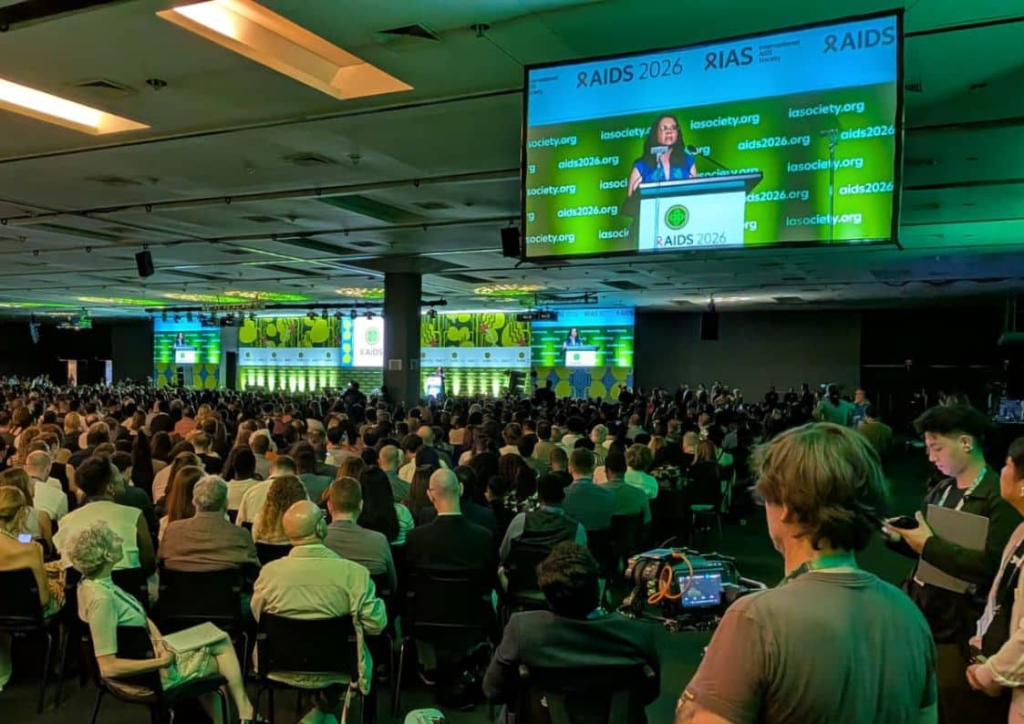
At the International AIDS Conference 2026 in Rio de Janeiro, under the theme “Rethink. Rebuild. Rise” we came together against a tumultuous funding and geopolitical backdrop, which has utterly changed the global response to HIV. At the same time, scientific discoveries have shown that they are bringing us the most powerful tools yet to end the pandemic as a threat to public health and individual well-being. For six days, delegates from across the response examined every aspect of this paradox and more. INERELA+ Executive Director, Munya Mandipaza is proud to have contributed through critical conversations on stronger domestic financing, greater efficiency and sustainable HIV programming.
1. The real impact of funding cuts
Eighteen months since the Trump administration severely disrupted aid funding, study after study, conversation after conversation brought home the hard reality of what that means for communities, services and the HIV response. Among the evidence:
The PEPFAR Pulse study of 166 implementing partners across 46 countries showed that US funding and policy changes resulted in more than 1,700 clinics and other service delivery sites being closed, mostly in eastern and southern Africa and affecting key populations.
A systematic review of 21 studies and reports indicated more than 8,000 PEPFAR-supported health workers were lost in South Africa and about 16,700 positions were affected in Zimbabwe. In central, eastern, southern and western Africa, PrEP initiations fell by 31-64%, voluntary medical male circumcision by 65-88%, and condom distribution by over 50%.
In Nigeria, key population prevention services reached 50.5% fewer people and HIV self-testing dropped by 70.2% between the first and second quarter of 2025. PrEP initiation among key populations decreased by 83%.
Reports released at AIDS 2026 frame the funding picture: a KFF and UNAIDS report found out that donor government funding fell by 25%; and a UNAIDS report found domestic HIV financing rose by 4% in 2025 – now nearly 60% of total HIV funding. For INERELA+ the era of relying on international aid is over.
2. Political leadership and new models of partnership
Eighteen months since the Trump administration severely disrupted aid funding, study after study, conversation after conversation brought home the hard reality of what that means for communities, services and the HIV response. Among the evidence:
The PEPFAR Pulse study of 166 implementing partners across 46 countries showed that US funding and policy changes resulted in more than 1,700 clinics and other service delivery sites being closed, mostly in eastern and southern Africa and affecting key populations.
A systematic review of 21 studies and reports indicated more than 8,000 PEPFAR-supported health workers were lost in South Africa and about 16,700 positions were affected in Zimbabwe. In central, eastern, southern and western Africa, PrEP initiations fell by 31-64%, voluntary medical male circumcision by 65-88%, and condom distribution by over 50%.
In Nigeria, key population prevention services reached 50.5% fewer people and HIV self-testing dropped by 70.2% between the first and second quarter of 2025. PrEP initiation among key populations decreased by 83%.
Reports released at AIDS 2026 frame the funding picture: a KFF and UNAIDS report found out that donor government funding fell by 25%; and a UNAIDS report found domestic HIV financing rose by 4% in 2025 – now nearly 60% of total HIV funding. For INERELA+ the era of relying on international aid is over.
3. Advances in long-acting prevention, access and the power of choice
Efficacy data for long-acting injectable HIV prevention, especially twice-yearly lenacapavir, have been impressive over the past two years, and studies spotlighted at AIDS 2026 brought it closer to real-world settings. In the PURPOSE 1 and PURPOSE 2 trials, 95% of participants across eight countries chose to continue lenacapavir, confirming a preference for long-acting options over daily pills – echoed in qualitative studies citing convenience and reduced stigma and pill burden.
Choice is expanding further: Modelling showed that Merck’s once-monthly oral MK-8527 could be mass produced for USD 15 per person per year; and the dapivirine vaginal ring offers a female-controlled monthly alternative.
Researchers shared some early rollout data for lenacapavir, showing it reaching PrEP-naïve clients, adolescent girls and key populations in Zambia and Eswatini. In Uganda’s Nakivale refugee settlement, the first humanitarian acceptability study of lenacapavir found it “life-changing” for displaced populations facing conflict and mobility restrictions. Sessions on PrEP delivery in eastern Europe and demedicalizing PrEP made it clear that expanding access is a matter of political will and delivery models, not just resources.
To access more information on AIDS Conference 2026, please click the link : https://inerelaorg-my.sharepoint.com/:w:/g/personal/bobo_inerela_org/IQD4NyAAmc0ZTKBB-CqRwSZaAWuqp0RtPwghdy6KgF3M4Ko?e=1DTjMI