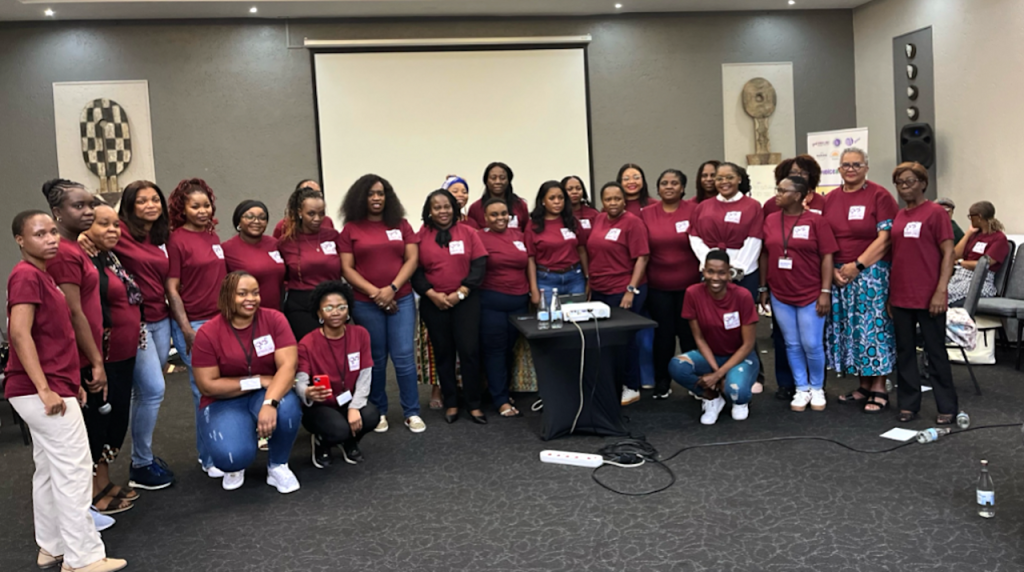
Participants At the High-Level Dialogue on the SADC Protocol on Gender and Development 16 – 17 August 2026
Gender equality advocates from across Southern Africa including the INERELA+ Executive Director, Munya Mandipaza gathered at Gender Links Cottages in Johannesburg on 16 and 17 August to shape a 2030
Campaign to protect hard won gains, confront growing pushback against gender equality and strengthen regional accountability through the SADC Protocol on Gender and Development.
Convened by the Southern Africa Gender Protocol Alliance, the two-day gathering came at a critical moment for the region. Despite significant legal and policy gains, women and girls continue to face persistent gender-based violence, unequal political and economic participation, threats and reproductive health and rights, shrinking civic space and increasingly organised anti rights mobilisation.
The Alliance, which is a regional Civil Society Network established in 2005 brings together civil society organisations, activists, and networks to coordinate and drive advocacy, strengthen accountability, monitor progress, advance gender equality commitments across the region and align state commitments with the SADC Protocol on Gender and Development. It successfully campaigned for the adoption of the SADC Protocol on Gender and Development in 2008. Almost two decades later, members are asking whether the regional instrument is fully responding to the realities, challenges and opportunities facing women and girls today. Since 2005, we have been on a gender transformative journey across the region. While important progress has been made, those gains are now at risk because key priorities and lessons are being overlooked.
On Sunday, 16 August, Alliance country focal points, thematic Cluster Leads and members met to take stock of progress, identify common regional concerns and agree on priorities for collective action. Rather than approaching the region country by country, the meeting used the Alliance’s thematic clusters to identify issues cutting across Southern Africa, drawing on country experiences to show where challenges are shared and where particular contexts require greater attention.
The programme also examined the growing regional and global pushback against gender equality, including challenges to bodily autonomy, sexual and reproductive health and rights, gender diversity and the participation of women in public and political life. On Monday, 17 August, the Alliance took the discussion into a broader High-Level Dialogue: From Civil Society Demand to Regional Action. The dialogue brought Alliance members into conversations with regional institutions, parliamentary actors, government, legal and human rights experts and specialist civil society partners on the future of the Protocol and practical pathways for continued regional engagement.
Below are some of the questions raised during the dialogue:
- What has changed since the Protocol was last reviewed?
- Which implementation gaps require stronger regional accountability?
- What emerging gender equality issues are not adequately reflected in the existing framework?
- How should Southern Africa respond collectively to organised anti rights and anti-gender pushback?
- What role should civil society, parliamentarians, governments and regional institutions play in shaping the gender equality agenda to 2030 and beyond?
The Alliance also engaged the SADC Parliamentary Forum through a focused roundtable on legal reform, domestication, parliamentary oversight and regional accountability.
The Johannesburg dialogue took place as regional leaders and civil society converged around the SADC Heads of State Summit processes, in Durban thereby providing an opportunity to ensure that gender equality remains firmly on the regional political agenda.
The Alliance also engaged the SADC Parliamentary Forum through a focused roundtable on legal reform, domestication, parliamentary oversight and regional accountability.
The Johannesburg dialogue took place as regional leaders and civil society converged around the SADC Heads of State Summit processes, in Durban thereby providing an opportunity to ensure that gender equality remains firmly on the regional political agenda.
From 18 to 21 August, Alliance members carried the 2030 Campaign into the Civil Society Forum in Durban, convened alongside the SADC Heads of State Summit processes. Drawing on country and cluster evidence, they contribute to thematic sessions and advocacy spaces, use the Gender Protocol Barometer to press for implementation and strengthening of the Protocol, and build wider civil society support for collective action to 2030.
Together, the Alliance convening, High Level Dialogue and evidence generated through the Barometers formed part of a broader effort to turn regional commitments into action and results.
#PushForward4Equality | #2030Campaign