
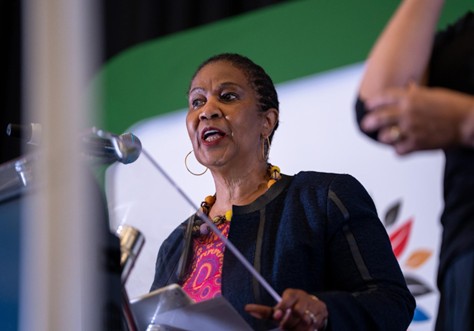
Dr. Phumzile Mlambo-Ngcuka
At a pivotal moment in global politics – amid intensifying conflicts, climate shocks, and stalled progress on the SDGs, the G20 Social Summit placed Women’s, Newborns’, Children’s, and Adolescents’ Health (WNCAH) firmly in the spotlight. The Global Leaders Network (GLN), together with Civil 20, Youth 20, Women 20, Children 20, and PMNCH, convened local stakeholders to push for bold G20 action on preventable maternal and child deaths. South Africa’s Minister of Health and GLN Chair, Dr. Aaron Motsoaledi, urged the G20 and African Union to place WNCAH as a standing agenda item, emphasizing that sustainable financing, expanded SRHR access, and political accountability are essential to reversing preventable deaths.
Former UN Women Executive Director and former Deputy President of South Africa, Dr. Phumzile Mlambo-Ngcuka, delivered a powerful keynote situating the G20 Social Summit within the“volatile, uncertain global moment” facing women and girls worldwide. She spotlighted the ongoing realities of child marriage, malnutrition, and FGM, and reminded participants that over 700000 women still die every year from preventable causes, most of them in Sub-Saharan Africa. She emphasised that we must act not because we are told to act, but because it is right to do so.
The first panel sounded an urgent alarm on preventable maternal deaths, linking the crisis to escalating climate shocks that disrupt access to essential SRHR services. Speakers argued that women’s health is a core economic issue and stressed the need to treat adolescents as a distinct demographic to unlock Africa’s demographic dividend. The second panel underscored civil society’s central role in shaping global health policy. Investing in community health workers emerged as a high-impact strategy for building resilient systems, while panellists insisted that civic voices must be included and not consulted as an afterthought to ensure rights-based, context-driven policies. Maternal deaths are a result of governance failures and shrinking civic space threatens progress. The key takeaway was inclusive governance, grassroots investment, and digital freedom are essential pillars for advancing global health and equity.
The G20 social summit declaration issued from the 3 days of conversation recognized young people and as key actors of development, calling for their improved engagement. It also called for stronger accountability and focus on women, children and adolescents as populations to prioritize.